
We Didn’t Just Invest in a Bigger Space—We Bought Our Company’s Future
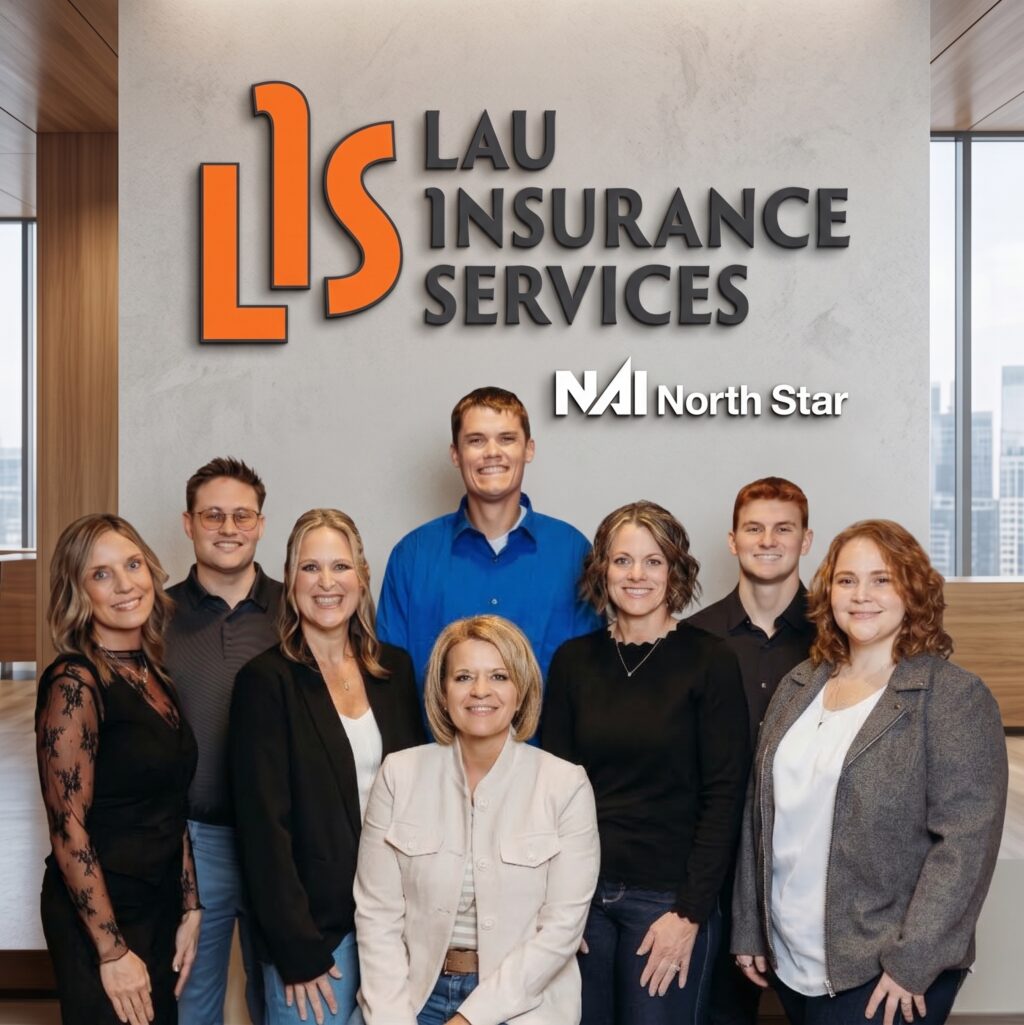
Co-written by Chris Lau, Owner, Lau Insurance Services, and Cate DeBates, NAI North Star
For years, Lau Insurance Services has called Riverfront Drive in Mankato home. It’s where we’ve grown our team, built relationships, and helped individuals, families, business owners, and property investors protect what they’ve worked hard to build.
This fall, we’re beginning a new chapter on Madison Avenue.
The decision to leave a building and location that has been part of our story wasn’t easy. But as our business grew, we realized something many business owners eventually face: the space that helped you get where you are isn’t always the space that will get you where you’re going.
Our new location gives us room to welcome clients and business partners, expand our team, and continue growing without sacrificing the personal service that has always been at the heart of Lau Insurance.
We didn’t simply invest in more square footage. We invested in our company’s future.
And going through this process reinforced something I see every day as an insurance professional: a commercial real estate decision is also a risk-management decision.
Your Building Is Part of Your Risk Profile
When businesses evaluate commercial real estate, location, price, square footage, and financing naturally get most of the attention. Insurance often comes later.
It should be part of the conversation much earlier.
Insurance carriers evaluate factors including a building’s age, construction type, occupancy, roof condition, building systems, updates, and fire protection. For investment properties, carriers may request rent rolls and information about improvements or updates.
The businesses occupying the property matter, too. Insurance companies have different underwriting appetites, meaning a property that looks like a great investment on paper may have fewer insurance options, or significantly different costs, because of its occupants or physical characteristics.
That’s why I encourage buyers to involve their insurance professional before purchasing a commercial property. We can often quote options during the due-diligence process and identify potential insurance concerns before they become surprises after closing.
Know What You’re Actually Insuring
Ownership also makes understanding the fundamentals of commercial insurance increasingly important.
One distinction property owners should understand is replacement cost versus actual cash value, or ACV.
Replacement cost coverage generally focuses on the cost to repair or replace damaged property, subject to the policy’s terms and limits. ACV accounts for depreciation. While selecting ACV may reduce premiums in some situations, the tradeoff can become significant when a claim occurs.
And that doesn’t apply only to a total loss.
A partial loss can still leave an owner responsible for depreciation that isn’t recoverable under an ACV settlement. Owners should understand that potential exposure before choosing coverage primarily because it costs less.
The same principle applies to deductibles and exclusions. Wind and hail deductibles, cosmetic damage exclusions, and other coverage limitations are increasingly important considerations for commercial property owners. A lower premium doesn’t necessarily mean a lower total cost of risk.
The question shouldn’t only be, “What does my insurance cost?” It should also be, “What am I financially responsible for when something goes wrong?”
Your Building Should Work for the Business
Owning commercial real estate can provide a business with more than a place to operate. It can become a long-term asset, provide greater control over the operating environment, and support future growth.
But ownership also creates new responsibilities.
Property insurance is only one piece of the picture. Business owners should think about liability protection, business interruption, commercial auto and workers’ compensation where applicable, umbrella coverage, continuity planning, and life or key-person insurance.
Consider what would happen if a significant property loss made your building unusable for several months. Could the company continue operating? Where would employees work? How would revenue be affected? What expenses would continue?
Those aren’t questions you want to answer for the first time after a loss.
Look Beyond the Monthly Payment—and the Premium
Real estate and insurance decisions have something important in common: focusing exclusively on today’s monthly cost can obscure tomorrow’s financial exposure.
Owning your space may create long-term financial and operational advantages, but there isn’t a universal insurance savings simply because you become an owner. The economics depend on the property, occupancy, coverage structure, and risks involved.
That makes professional guidance important.
People are busier than ever, but business owners should make time to sit down with their insurance agent and discuss how their risks are changing. Your insurance company doesn’t automatically know that you’ve renovated a property, added employees, changed operations, or introduced a new exposure.
When something changes in your property, management, workforce, or operations, tell your agent. The stronger the relationship, and the more your advisor understands your business, the better positioned you are to make informed decisions about coverage.
The same is true in commercial real estate. The right broker, lender, insurance professional, and other advisors should help you evaluate more than the transaction in front of you. They should help you understand how today’s decision fits into the long-term strategy of the business.
A New Address. A New Chapter. The Same Lau Insurance.
Leaving Riverfront Drive is bittersweet. We’re proud of what we built there.
But we’re not leaving that story behind.
We’re bringing the relationships, memories, clients who have trusted us, team members who helped us grow, and our commitment to being there when our clients need us most.
Our new Madison Avenue space gives Lau Insurance Services room to keep building on that foundation.
For other business owners considering their next real estate move, our experience reinforced one lesson: don’t evaluate a building only for what it costs today. Evaluate what it allows your business to become tomorrow, and understand the risks you’re taking along the way.
Sometimes the right property isn’t simply a bigger space.
It’s an investment in your company’s future.
Lau Insurance Services is a locally owned, independent insurance agency serving individuals, families, and businesses throughout Minnesota. The agency offers homeowners, rental property, auto, business, and life insurance through multiple insurance carriers. NAI North Star provides commercial real estate brokerage, development, and property management expertise throughout Southern Minnesota.